
The Weight of the Executive Chair
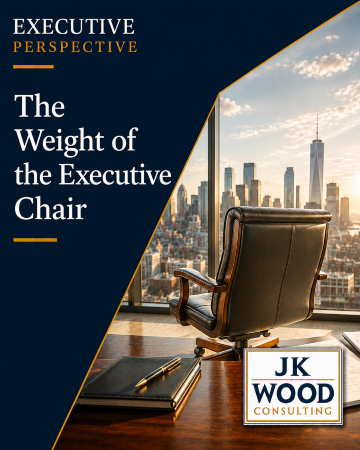
There is a difference between participating in a difficult decision and being ultimately responsible for making it.
From the outside, executive decision-making can sometimes appear straightforward. Gather the information. Evaluate the options. Choose a direction.
In practice, the most consequential decisions rarely arrive with everything you would like to know.
The information may be incomplete. The alternatives may all carry risk. Different stakeholders may have legitimate but competing interests. And waiting for greater certainty can carry consequences of its own.
Eventually, someone has to decide.
That is part of the weight of the executive chair.
I’ve found that experience doesn’t necessarily make those decisions easier. What it does is provide a better framework for making them.
What do we know?
What are we assuming?
What information would materially change the decision?
What are the consequences if we are wrong?
And how much does waiting improve our position—or simply postpone a decision that already needs to be made?
There is also another part of executive responsibility that receives less attention.
Once the decision is made, the organization needs direction.
People need to understand where they are going and have confidence that leadership is prepared to move forward. Continuing to publicly revisit every uncertainty can transfer the burden of the decision to the people you are supposed to be leading.
That doesn’t mean refusing to change course when new information emerges.
It means accepting responsibility for the decision you made with the information you had at the time.
Some decisions will prove right. Others won’t. No executive gets every one of them correct.
The responsibility is not to eliminate uncertainty.
It is to exercise sound judgment despite it, make the decision when the time comes, and accept responsibility for what follows.