
The Hidden Cost of Complexity
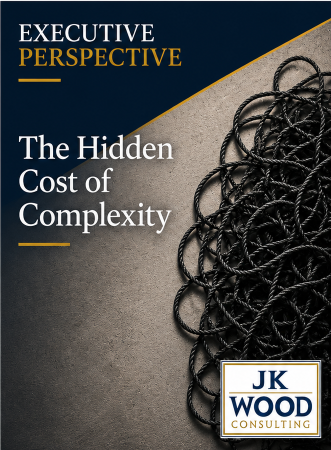
Complexity rarely appears overnight.
It builds gradually.
A new approval process. An additional meeting. Another report. One more layer of oversight. Individually, each change seems reasonable. Collectively, they begin to slow the organization.
I've seen businesses where talented people spend more time navigating internal processes than serving customers, solving problems, or creating value.
The result isn't just frustration.
It's lost momentum.
Complexity affects more than efficiency. It affects decision-making. When simple decisions require excessive coordination, organizations become hesitant. Opportunities are missed. Employees become reluctant to take initiative because the path forward is no longer clear.
Ironically, many organizations add complexity in an effort to reduce risk.
Over time, that same complexity becomes one of the greatest risks they face.
Strong leaders regularly ask difficult questions:
• Does this process still serve a purpose?
• Are we creating value or simply creating more work?
• Is there a simpler way to accomplish the same objective?
Simplification isn't about cutting corners.
It's about removing unnecessary obstacles so people can focus on the work that matters most.
The organizations that consistently outperform their competitors are rarely the ones with the most complicated systems.
More often, they're the ones that have the discipline to keep things simple.